 |
| Bringing Chester's History To Life to Enrich Our Lives |
|
|
 |
| Res |
|
|
Saturday, May 2, 2026, Morris County's Pathways of History will include Chester's Rockefeller Center. Though the building is undergoing restoration we will have information on the building's history and the restoration program. Please come on May 2 from noon to 4 pm.
|
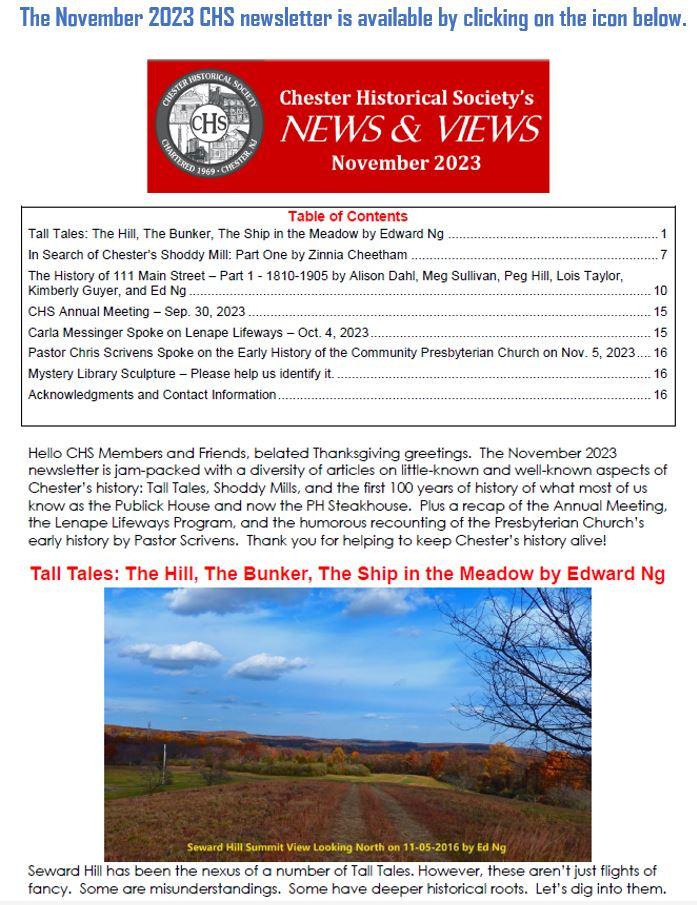 |
| Click on the icon below to access the newsletter PDF |
|
|
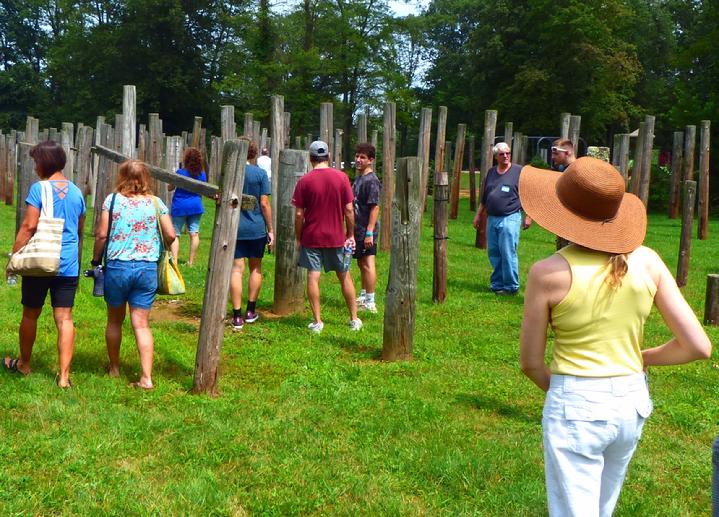 |
| Bell Labs Chester Telephone Pole Farm Hike |
|
|
Video and Images from the
Telephone Pole Farm and CHS Archives
Program and Tours 7/29/2023
Click on links below:
CHS Facebook
and
Article in the Observer Tribune August 1, 2023
|
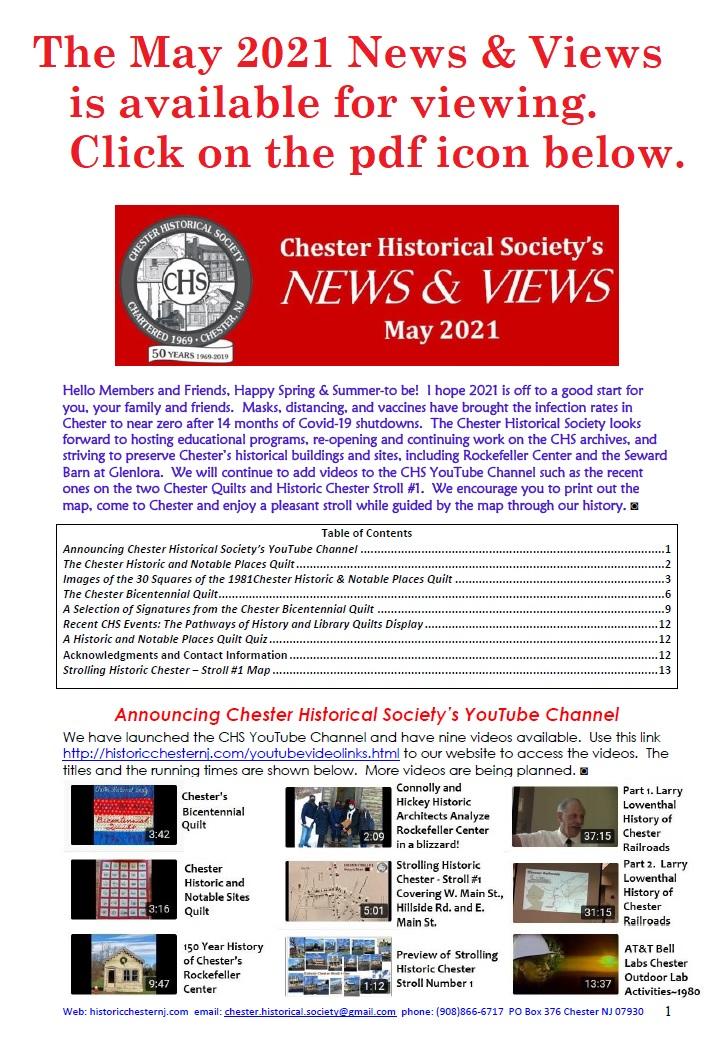
The CHS May 2023 Newsletter is available by clicking on the icon below.
Contents
The Chester Business Directory in the 1868 Beers Atlas
Reverend James F. Brewster (1831-1897)
Chester's Little Niagara Falls - Myth or Reality?
Hall of Famer Tommie Barker - Her Life In Her Own Words
The CHS Archives Got a Makeover!
May 2023 Pathways of History and Rockefeller Center
|
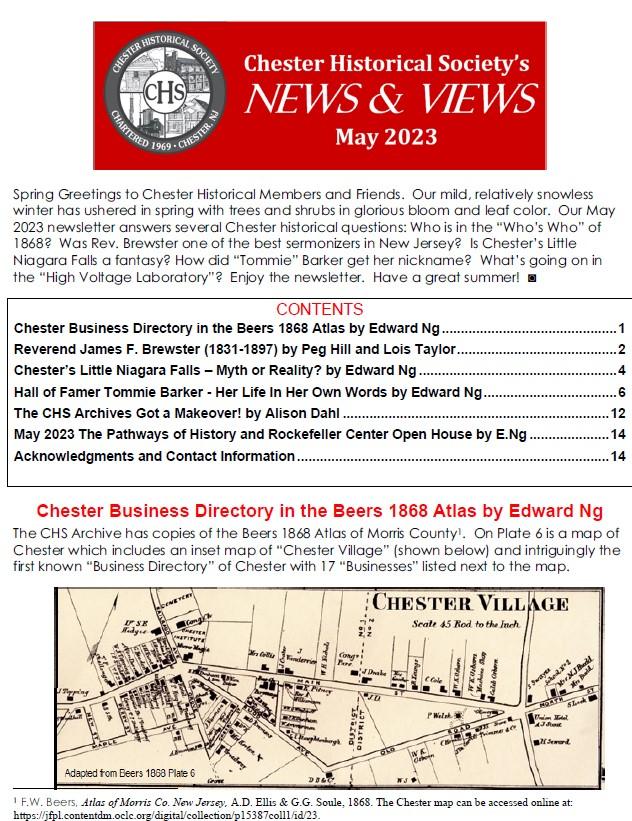 |
| May 2023 News & Views Page One |
|
|
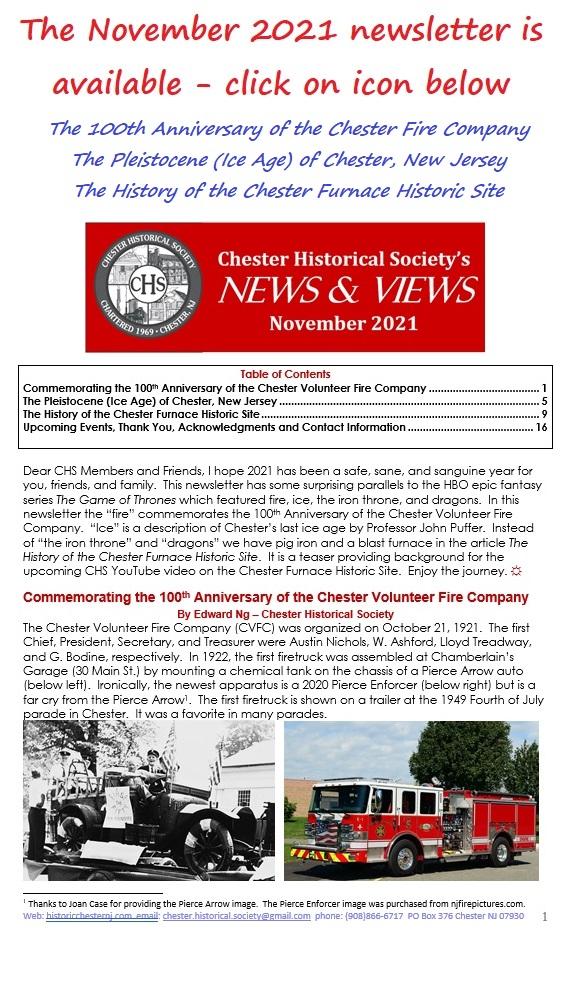
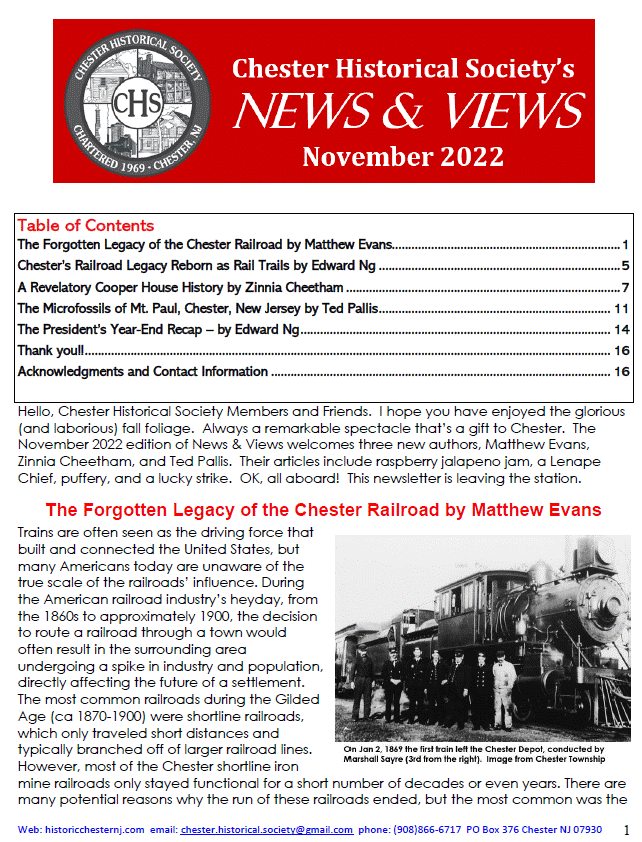
The November 2022 CHS Newsletter is Available - click on the icon below.
Contents:
The Forgotten Legacy of the Chester Railroad
Chester's Railroad Legacy Reborn as Rail Trails
The Real Story of General Nathan Cooper
The Microfossils of Mt. Paul, Chester, New Jersey
The President's Year-End Recap
Thank you, Bruce, John, Betsy, Trustees and Members
|
 |
| First page of November 2022 Newsletter |
|
|
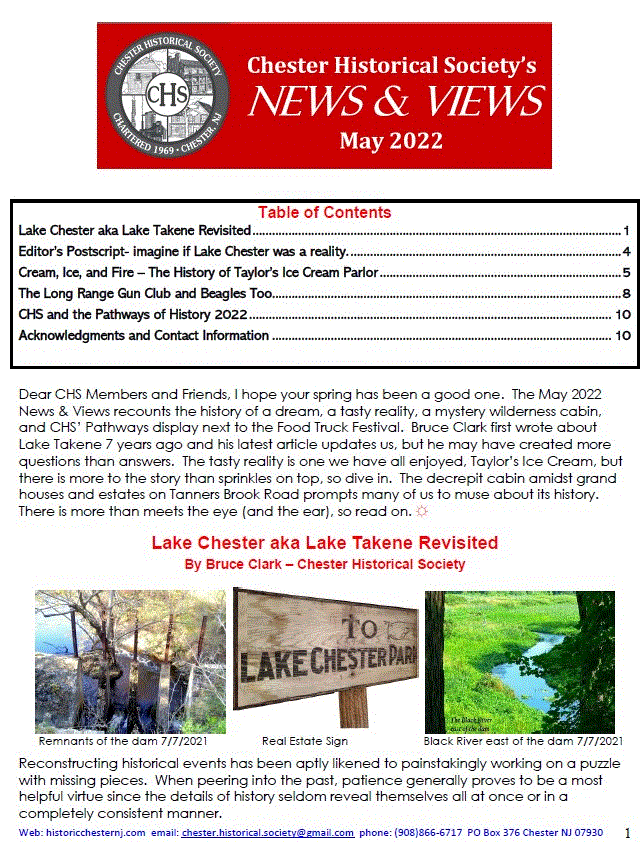
The May 2022 CHS Newsletter is available by clicking on the icon below.
Contents:
Lake Chester aka Lake Takene Revisited
Editor's Postcript-Imagine if Lake Chester Was a Reality
Cream, Ice and Fire - The History of Taylor's Ice Cream Parlor
The Long Range Gun Club and Beagles Too
CHS and the Pathways of History 2022
|
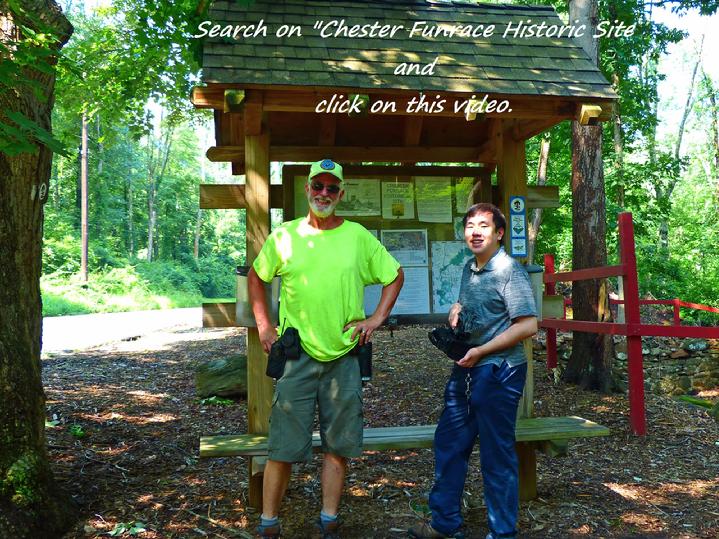
A New CHS Video on YouTube:
The Chester Furnace Historic Site Introduction and Hike with Bruce, Alex, and Ed
Copy this into a browser window:
https://youtu.be/k25J-50htpY
or
|
 |
| Search on "Chester Furnace Historic Site' and click on this YouTube video |
|
|
About the video: The Chester Furnace Historic Site helps preserve and educates us on a surprising and unique episode in Chester’s long history. It was a time that historian Larry Lowenthal called “a heady and confident period in Chester’s history, perhaps the brightest it has known”. In this video, Ed Ng sets the scene, then Bruce Clark and Alex Louie hikes you through the site. Woolly mammoths, the indigenous Lenape, ‘Lucky” Perry Skellenger, the engineering genius William J. Taylor, furnacemen with indigestion, schemers who wanted to dam the Black River to create the Lake Chester, and the men of the Civilian Conservation Corps, all have roles in this fascinating locale. Learn how it all comes together in this video on the Chester Furnace Historic Site.
(PS Two companion articles are in the November 2021 CHS News & Views, link below)
|
Chester Historical Society's
YouTube Channel
Click on the YouTube Videos Links tab in the menu on the left
Current Chester Historical Society's YouTube Videos:
Chester Furnace Historical Site Introduction and Hike with Bruce, Alex, and Ed
Chester Historical Society’s Bicentennial Quilt
Chester Historical Society’s Historic and Notable Places Quilt
Chester’s 150-Year-Old Rockefeller Center: Past and Present
Chester's Rockefeller Center Historic Preservation Plan Survey Feb. 23, 2021
Strolling Historic Chester - Stroll One - Hillside Road and East & Center Main Street
Historic Chester Stroll One Overview: center Main St., Hillside Rd. and east Main St.
Part 2: Larry Lowenthal: History of Chester Railroads- May 11, 2013 -Chester Historical Society NJ
Part 1: Larry Lowenthal: History of Chester Railroads -May 11, 2013 -Chester Historical Society NJ
AT&T Bell Labs Open Air Laboratory Chester NJ circa 1980
|
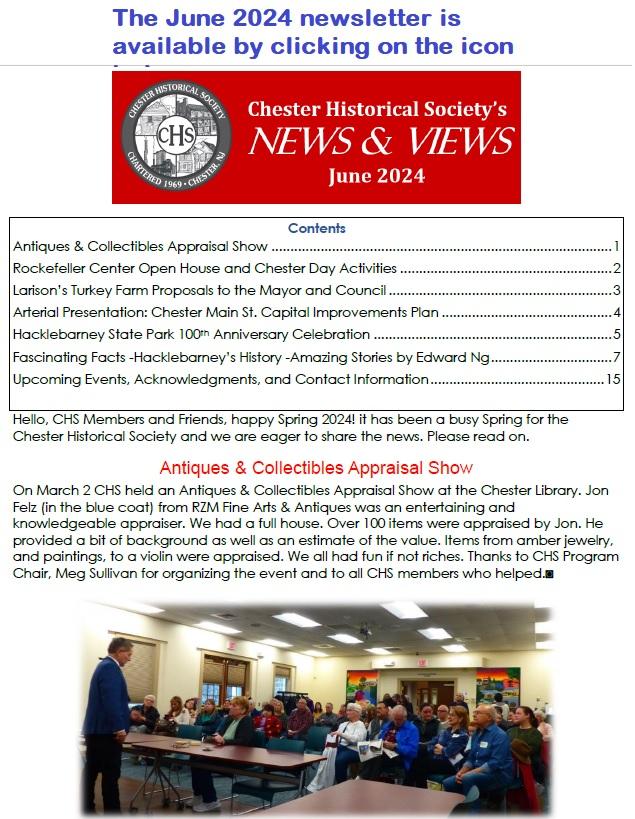
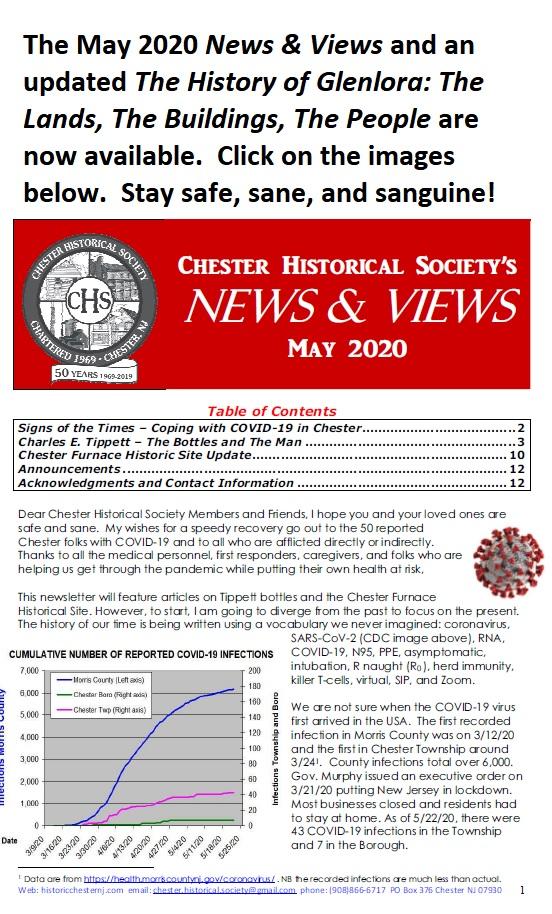
The November 2020 News & Views is now available for viewing.
A blast from the past: The ads in the 1976 "A Stroll Through the Old Village of Chester", The 150-Year History of Chester's Rockefeller Center, Martha Brookes Hutcheson- "Farmerette", a tribute to Larry Lowenthal 1940-2020, and a Chester Covid-19 Update.
Click on the PDF Icon below.
|
 |
| May 2020 News and Views Page One |
|
|
 |
| Glenlora April 2020 Image by Ed Ng |
|
|
The Past and Future of Glenlora
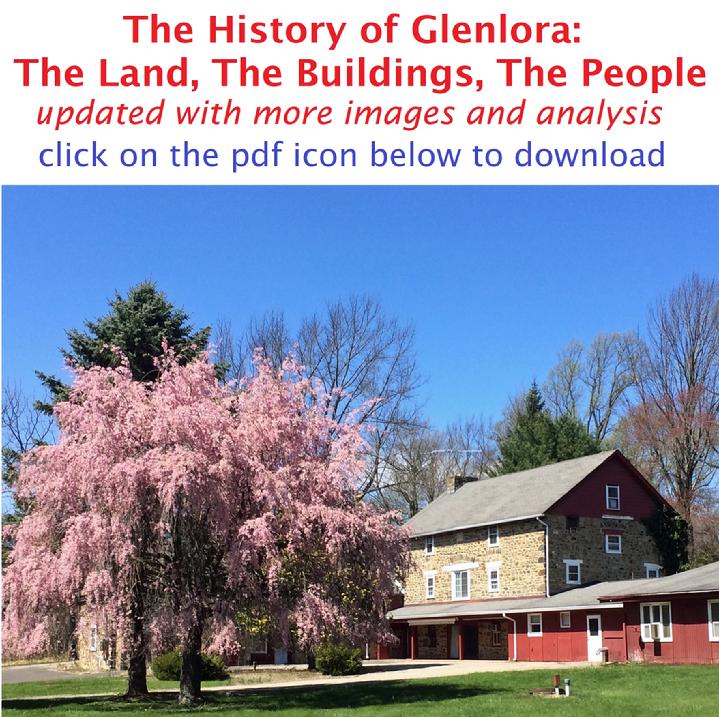
The 140+ year history of Glenlora is a classic case study in adaptive reuse. William H. Seward built the 3 story, 3 bay stone barn and stables in 1878. Befitting the high status of the Seward family in Chester, he built a special barn in stone, not wood, with elegant curved window arches, metal S anchoring irons, and a large datestone memorializing the achievement and identifying him as the erecter, and others by name as the architect, mason, and carpenter. In the 1940’s, the Boden family adapted the buildings to a spacious house, which became a loving home. In 1962 John and Margaret Becker spent over a million dollars (in 2019 currency) to convert the house to a nursing home and added a residential care wing, housing 26 beds. For the next 43 years, the Beckers, Kay Dulio, Ann and Ray Walborn, and briefly, Mohammed El-Hawwat, maintained, updated, improved, and compassionately used the stone barn, stables, and residential care wing. The Glenlora Nursing Home was a comfort, asset, and source of fond memories to the Chester community and many of its residents. In future considerations for the use of the Glenlora property, preservation and adaptive reuse of the stone barn, stables, and bucolic setting is not only paramount, but eminently feasible and practical.
|
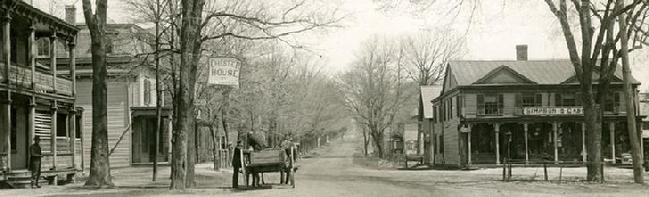 |
| Along Main Street in Chester, NJ around 1890. |
|
|
As you read this, try to imagine what life was like over 200 years ago. In the early 1700s, the trails across New Jersey were Indian trails through densely wooded areas, and wide enough only for a man on horseback. It was by these trails that a band of settlers from Southold and Easthampton, Long Island, came to the rolling green hills of Morris County. Two of these trails crossed in the area that the Minisink Indians called “Alamatunk,” which meant “black earth bottom” for Black River. And “Black River” was the original name for Chester.
Most long-time “Chester-ites” say that no one knows why the name “Black River” was dropped and “Chester” was adopted. Some of the residents had been calling their community “Chester” for a good while, and it has been noted that it probably was because Chester, England was the home of their ancestors. These English ancestors migrated to New England and then to Southhold and the Hamptons in Long Island; their grandsons came to Black River in New Jersey. The people of Black River must have felt great satisfaction when they received notice from the state that their wish to create their own township was granted! Thus, on January 29th, 1779 the business of running the new Township Of Chester began.
Because of the two great roads which intersected in Chester, taverns, inns, blacksmith shops and other travel-related businesses flourished during the latter half of the eighteenth century. Distilleries also did a thriving business in applejack and apple brandy (known as “Jersey Lightening”) produced from apples grown in the many local orchards, a few of which still operate today. Not only were the rolling hills of the area dotted with orchards of peaches and apples, but dairy and sheep farming were very widespread as well.
During early settlement, agriculture was a mainstay of the area; however, industrial potential was soon to be realized. Numerous swift-flowing streams provided ideal settings for water-powered grist and saw mills. These streams also served as sources of power for the early charcoal burning forges and furnaces, which were used to work the iron ore taken from local mines.
The Civil War brought more demands for iron and the mines began to flourish. During the period from the late 1860s to the late 1880s, Chester had 28 active mines. In 1880 six mines were operating on Main Street alone. Several hundred thousand tons of iron ore were taken from 25 to 30 different mines at this time. In 1868 the Lackawanna Railroad built its branch in Chester, and in 1872-73 tracks were laid to connect it with the Hedges and Hacklebarney mines. These tracks were later purchased by the Central Railroad and carried through to High Bridge. Sometime later, the DL&W Railroad took over the tracks alongside Chester’s “Muskrat” Station that ran to Dover.
The Chester iron industry suffered with the mining of much larger and richer iron ore deposits found in Minnesota’s Mesabi Range, and by the 1890s all of the Chester mines were shut down. Residents who could not return to farming soon moved away. Even though Chester died as a mill and mining town, some unusual light industry soon moved in to support the town. Two of these industries were Sturzenegger’s Swiss Embroidery Factory from New York and the Davidson Handkerchief Factory.
Also, in the early 1900s Chester became a very popular retreat for city-weary New Yorkers. Local hotels charged reasonable rates and visitors were drawn by the famous springs with their health-giving waters on top of Schooley’s Mountain.
Small towns during this time utilized their main streets for almost all of the local businesses, schools, churches and homes. Local taverns were not only stopping-off places for visitors to “wet their whistles,” but they were where much of the news of the area was passed on. Many of these original buildings still remain on Chester’s Main Street and country roads today.
A booklet entitled “A Stroll Through The Old Village Of Chester, NJ,” published by the Chester Historical Society, assists those interested in a historic walk or ride through Chester in finding various historical sites. Please refer to this web site's section, "Publications," to learn more about the availability of "A Stroll Through the Old Village of Chester, NJ" and other publications by the Chester Historical Society.
|
|